

“To teach is to create a space where the community of truth is practiced. And that means listening deeply — to ourselves, to each other, and to the subject.”
— Parker J. Palmer
I write this teaching dossier — the most extensive reflection I have undertaken on my teaching — in my 26th year as a full-time music professor in higher education. I have taught and created music at Southern Utah University, Georgetown University, McMaster University, York University, the University of Waterloo, and now Wilfrid Laurier University. My journey has moved from the precision of conducting and the scholarship of theory and history to the unpredictable, deeply human terrain of intercultural listening and relational pedagogy. From the ordered traditions of classical music to the open, complex world of community music, each chapter has been shaped by the challenge of adapting to new contexts, new students, and a rapidly shifting world — a path defined as much by reinvention and risk as by achievement. This path has been guided by foundational influences, including Pauline Oliveros’ Deep Listening, R. Murray Schafer’s The Tuning of the World, and other scholarship that frames listening as a transformative practice.
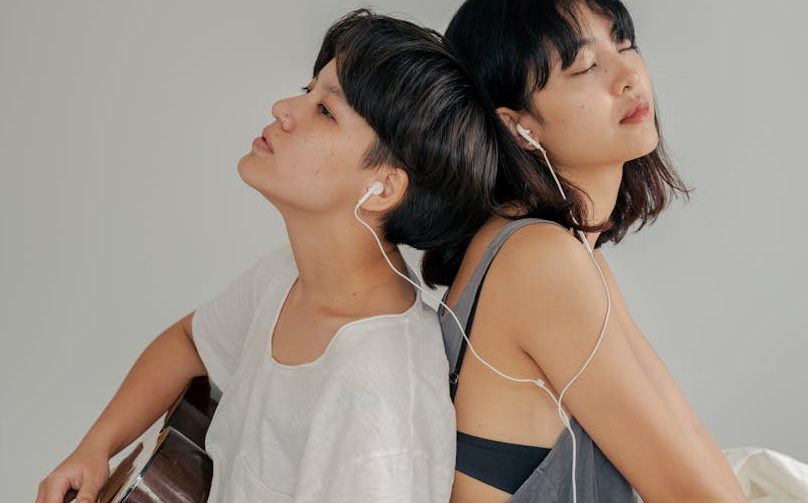
I have conducted large-scale choirs, facilitated intimate seminar discussions, and designed courses that intertwine scholarship with social engagement, navigating the labyrinth of intercultural, interfaith, and transcultural musics. This work often takes me into spaces where answers are rare and questions are many — where music is performed and lived as an ethical, cultural, and communal practice. These spaces are enriched and challenged by the realities of teaching across differences. I approach each challenge directly, learning as much from missteps as from successes, with a focus on turning difficulty into dialogue and dialogue into growth.
My teaching is grounded in the belief that music, especially when curated through deep listening, can catalyze societal change. I cultivate listening as a form of empathy and agency, as well as a uniquely improvisational and musical skill. Whether integrating technology, working across disciplines, or taking creative risks, I create environments where students engage across boundaries, discover shared humanity, and experience music as a bridge between worlds. My story as an educator is one of resilience and transcendence — a continual pursuit of connection and compassion through music, fostering communities that move beyond boundaries and into shared possibility.

Photo by Ksenia Chernaya on Pexels.com
Teaching Philosophy
I. Excellence and Artistry
My teaching began in the traditions of excellence — precision in conducting, mastery of musical language, and the disciplined artistry of classical performance. In my early years at Southern Utah University, Georgetown University, and McMaster University, I led ensembles that demanded technical precision and expressive depth, grounding students in the core skills and discipline of music-making. This phase shaped my identity as an educator who values rigor, clarity, and the pursuit of the highest artistic standards.
II. Community and Connection
Over time, my teaching expanded beyond presentation to participation — beyond performance to dialogue. At York University and the University of Waterloo, I turned increasingly to community music, integrating social engagement, intercultural dialogue, and collaboration into my courses and ensembles. In these settings, I began to see music not only as an art to be perfected, but as a shared space for grappling with questions of identity, belonging, and justice. Projects with Indigenous elders, immigrant communities, and interfaith groups became central to my pedagogy, helping students experience music as a living practice embedded in relationships and community life.
III. Listening as Compass
In recent years, my work at Wilfrid Laurier University has been guided by listening — listening as the foundation for artistry, ethics, and human connection. Deep listening, informed by Pauline Oliveros and R. Murray Schafer, is not passive hearing; it is an active, compassionate practice that fosters awareness of self, others, and environment. It reaches into the internal world of reflection, the natural world of soundscapes, and the relational world of human interaction. Listening creates the conditions for real dialogue, for crossing cultural and personal boundaries with openness rather than fear. It is a way of teaching that embraces complexity, resists simple answers, and encourages students to dwell in questions.
IV. Improvisation and Innovation
Improvisation is the throughline in my work — musically, it allows freedom and responsiveness; pedagogically, it fosters adaptability and resilience. My use of technology and AI arises from this improvisational ethos, never as an end in itself, but as a means to deepen connection and expand possibilities. Whether through AI-assisted composition, immersive sound technology, or cross-disciplinary collaborations, I use these tools to support my central values: openness, awareness, compassion, and the courage to engage across difference.
At every stage of my career, I have sought to connect the discipline of musical excellence with the freedom of improvisation, the intimacy of listening with the reach of technology, and the precision of artistry with the messiness of human community. My teaching is animated by a belief in music’s power to cultivate empathy, resilience, and shared possibility — a belief that the classroom, rehearsal hall, or community gathering can be a place where art does more than express; it transforms.
 Gerard Yun: A Portfolio